

Without a doubt, the most incredible quality that music has is the capacity to evoke imagery. It wasn’t until Hector Berlioz’s Symphonie Fantastique that program music, or music written with a story to illustrate, was formally introduced to listeners. Yet rewind roughly 100 years to 1725, and you find that Antonio Vivaldi was already onto the idea.
The Four Seasons concertos are a study in the use of musical texture to evoke imagery. The ubiquitous Spring is easily the most familiar string concerto ever written, but it would be a terrible mistake to fail to listen to the rest of them. It was Summer that began my classical music journey when I was eleven.
In the first movement, Vivaldi’s music describes sweltering heat, the warning cry of the cuckoo bird (which, if you listen for it, sounds exactly like a “cu–ckoo“), the “ardent” twittering of the finch, and foreshadowings of a terrible summer gale. Itzhak Perlman’s remarkably clear technique causes the various vocalizations of the birds to shine.
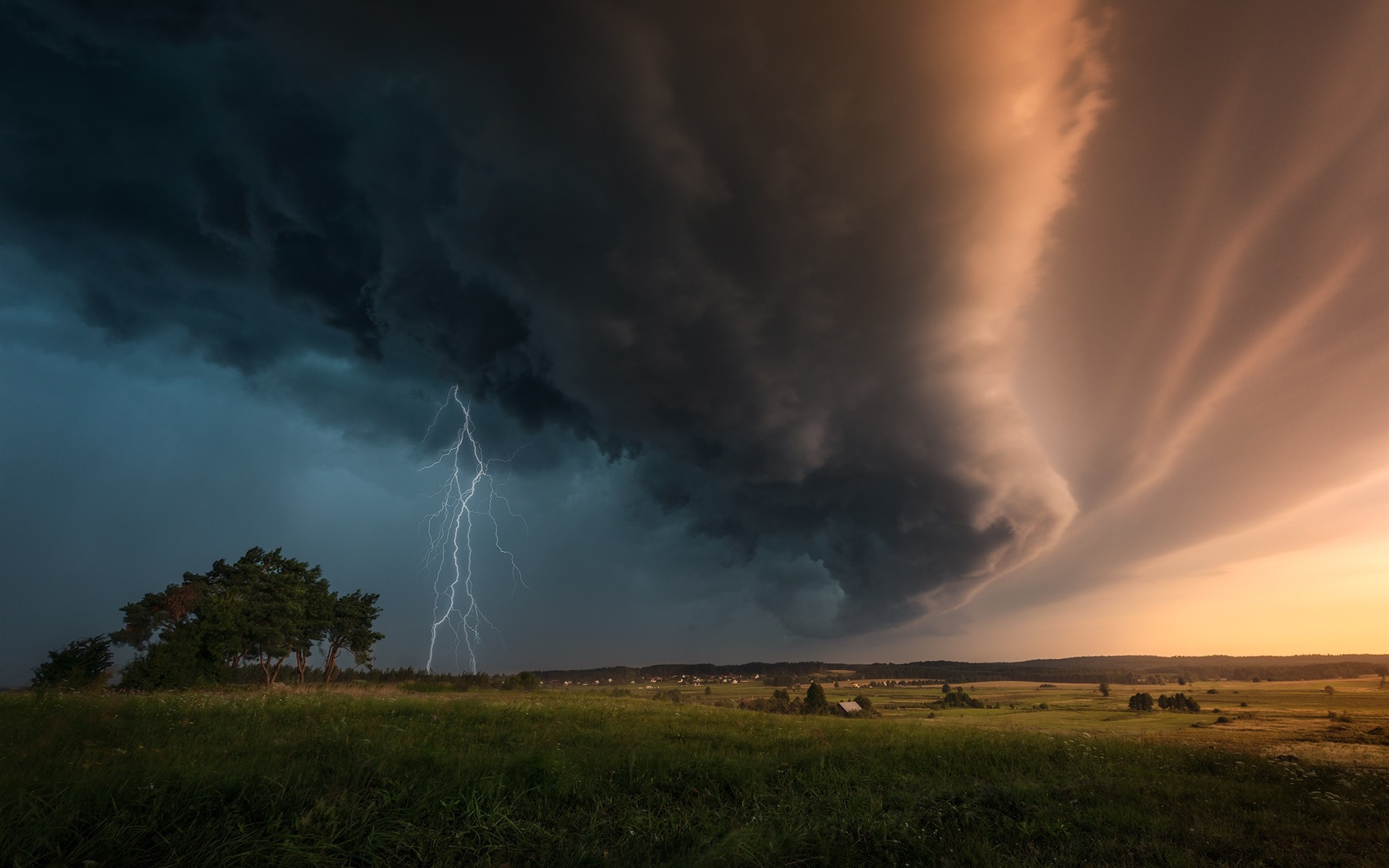
The second movement, the slow one, is punctuated by more warnings of the impending storm, which finally makes its appearance in the roaring, powerful third movement. I recall the excitement that this movement drew from me upon my first listening. It was at the moment that I first heard this movement, and was compelled by some unknown force to hear it again, twice, at full volume, that I first realized the emotional powers of classical music. Experiencing the third movement at a loud enough volume is strikingly akin to being hit by a freight train, in the best sense possible.
To accompany his music, in a way very suggestive of the program music that would follow a century later, Vivaldi wrote an “illustrative sonnet” as a verbal depiction of what each of his pieces represented. Rather than over analyze the incredible musical textures that represent the various elements of Summer, I will allow Vivaldi’s poem to act as the framework, which the music fills and fleshes out into a colorful watercolor.
I. Allegro non molto—
Under the heat of the burning summer sun,
Languish man and flock; the pine is parched.
The cuckoo finds its voice, and suddenly,
The turtledove and goldfinch sing.
A gentle breeze blows,
But suddenly, the north wind appears.
The shepherd weeps because, overhead,
Lies the fierce storm, and his destiny.
II. Adagio; Presto—
His tired limbs are deprived of rest
By his fear of lightning and fierce thunder,
And by furious swarms of flies and hornets.
III. Presto—
Alas, how just are his fears,
Thunder and lightening fill the Heavens, and the hail
Slices the tops of the corn and other grain.
L’Estate (Summer)
Opus 8, No. 2, in G minor
 All the Feels
Hey Oliver, this is so cool! Thanks for these posts. I love the poetry Vivaldi wrote to go with Summer. I never knew about that.
LikeLike